
Believe it or not, rough and tumble play is actually ok! Research has shown it is necessary for social awareness, compassion, and cooperation.
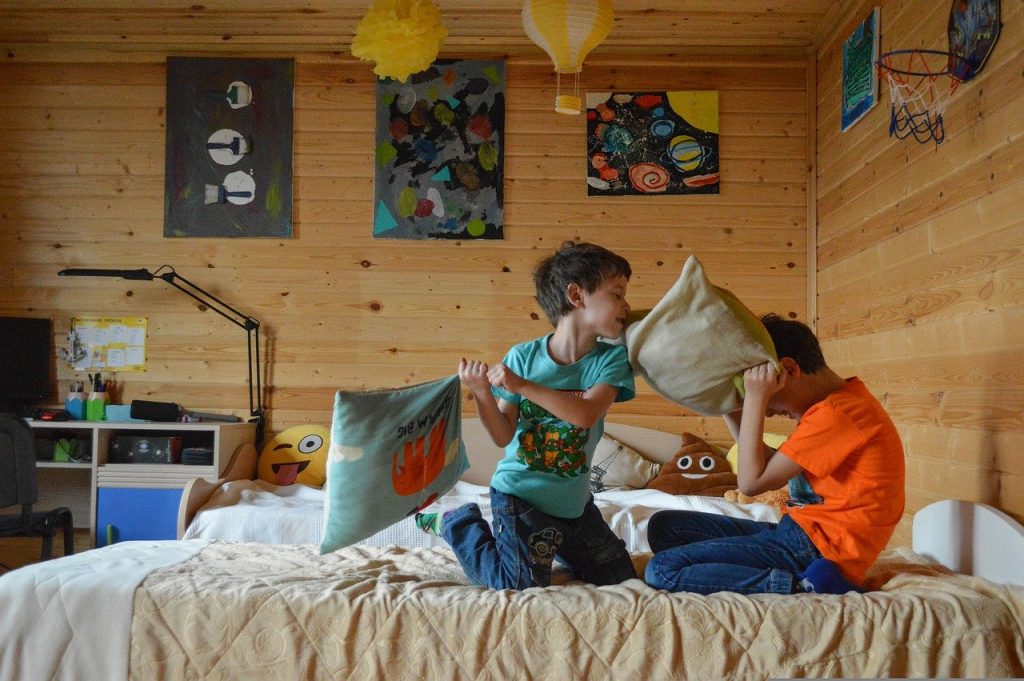
- Children are more body-based – this is how they learn about their world
- Other benefits include:
- Improves motor skills
- Allows for emotional expression, energy release and tension reduction
- Teaches social awareness and boundaries
- Stress hormones go down; Stimulates endorphins and oxytocin (bonding)
So what is the difference between rough and tumble play versus fighting? Rough and tumble play will always have:
- Willing participants
- The children are having fun
- The children keep returning to the rough and tumble play
If one of the children is not having fun, not a willing participant and there is intention to hurt, then this is not rough and tumble play.
How to support safe rough and tumble play:
- Ensure that the area is free from objects that can cause injury
- Is the area large enough to support this type of play?
- Set rules for the rough and tumble play such as “no hitting” and “no biting”

Denise Stacey
Since childhood, Denise has always been known to be a problem solver and helper. Her lived, and professional experiences are a mosaic of diverse roles and relationships, including being a second-generation Canadian, Alberta Certified Teacher, behaviour specialist, and parent.
Denise knows firsthand the complexities of navigating a world with a child that has behavioural struggles, a bicultural world, the world of education and everyday interactions. Her heart extends to young adults and adoptive families as they navigate life’s ups and downs and in between. With a warm, understanding spirit, Denise is dedicated to helping her clients find their way, offering a guiding hand informed by a life rich in experiences that many can relate to.