

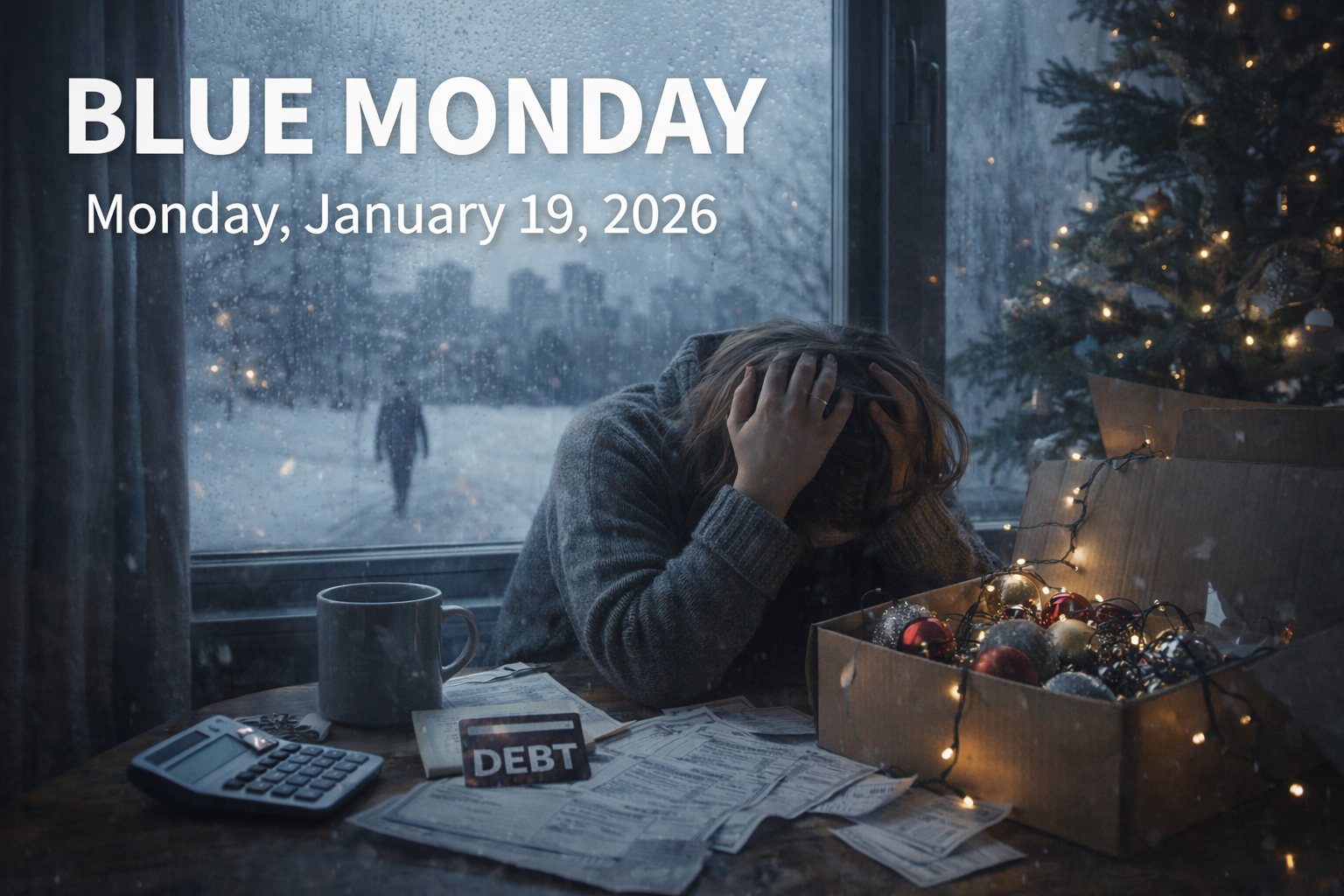
Popular culture has named Monday, January 19, 2026, as Blue Monday. When considering the changes that everyone goes through during these months, it’s no wonder January can be a hard month for some. Factors that cause low mood include:
-
- post-holiday blues
- winter weather and less sunlight
- holiday debt
- the fun of the holidays being over
- changes in routine
While we can all relate to feeling blue or down, Seasonal Affective Disorder is more than just the Monday blues. People who experience SAD in the winter months describe symptoms commonly seen in depression, with a couple of additional indicators, including: Oversleeping, overeating leading to weight gain and social withdrawal and isolation.
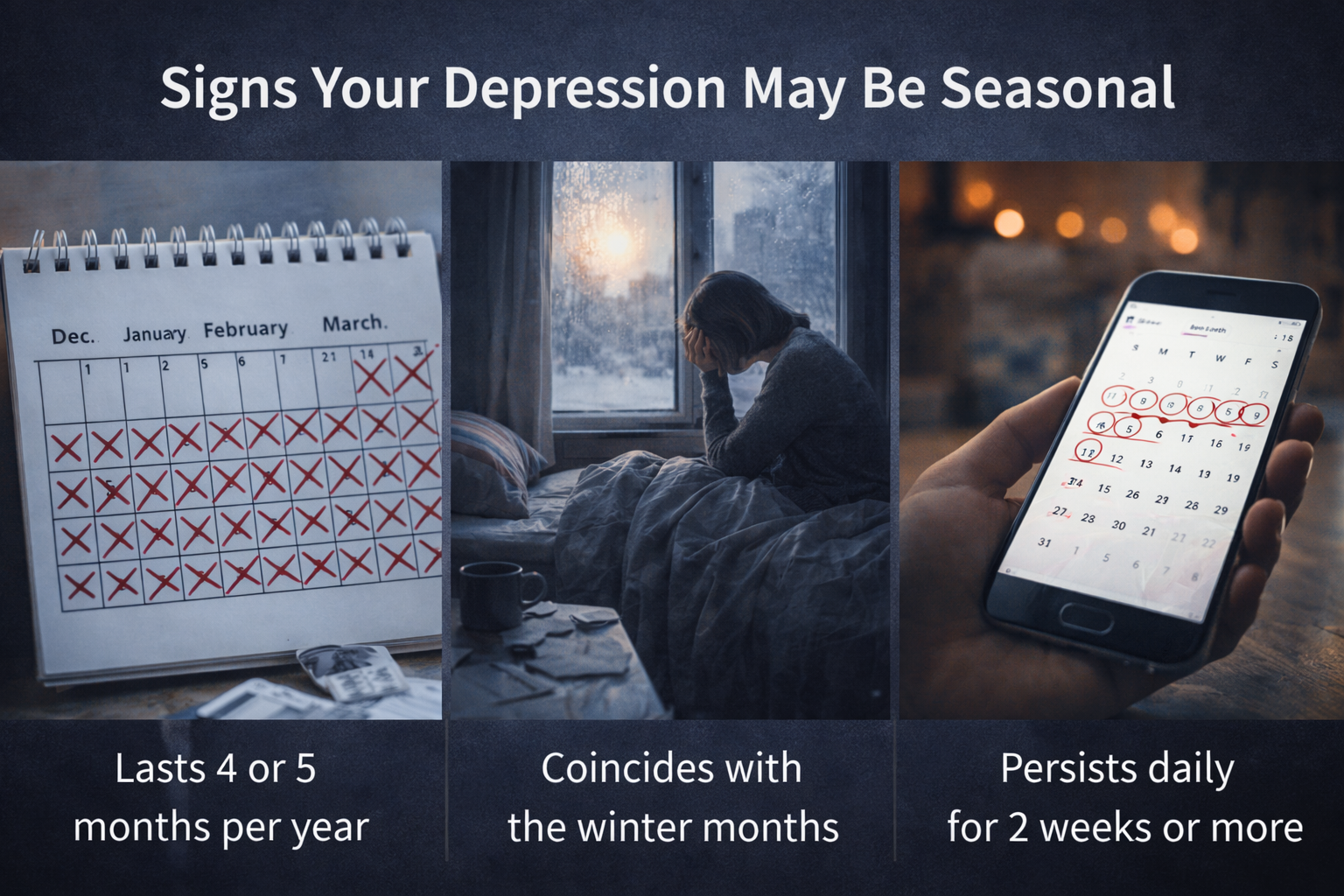
Here are 3 indicators that you might be dealing with more than a case of the Mondays:
-
- Your symptoms of low mood or depression last for 4 or 5 months per year
- The symptoms coincide with the winter months
- Your symptoms are persistent and occur daily for 2 weeks or more
What can you do to help?
-
- Sun lamp / grow lamp: These can help you get extra light exposure during the darker winter months
- Gratitude journaling
- Spending time outside while the sun is up
- Routine: stick to a healthy routine, including diet, exercise, and a bedtime routine.

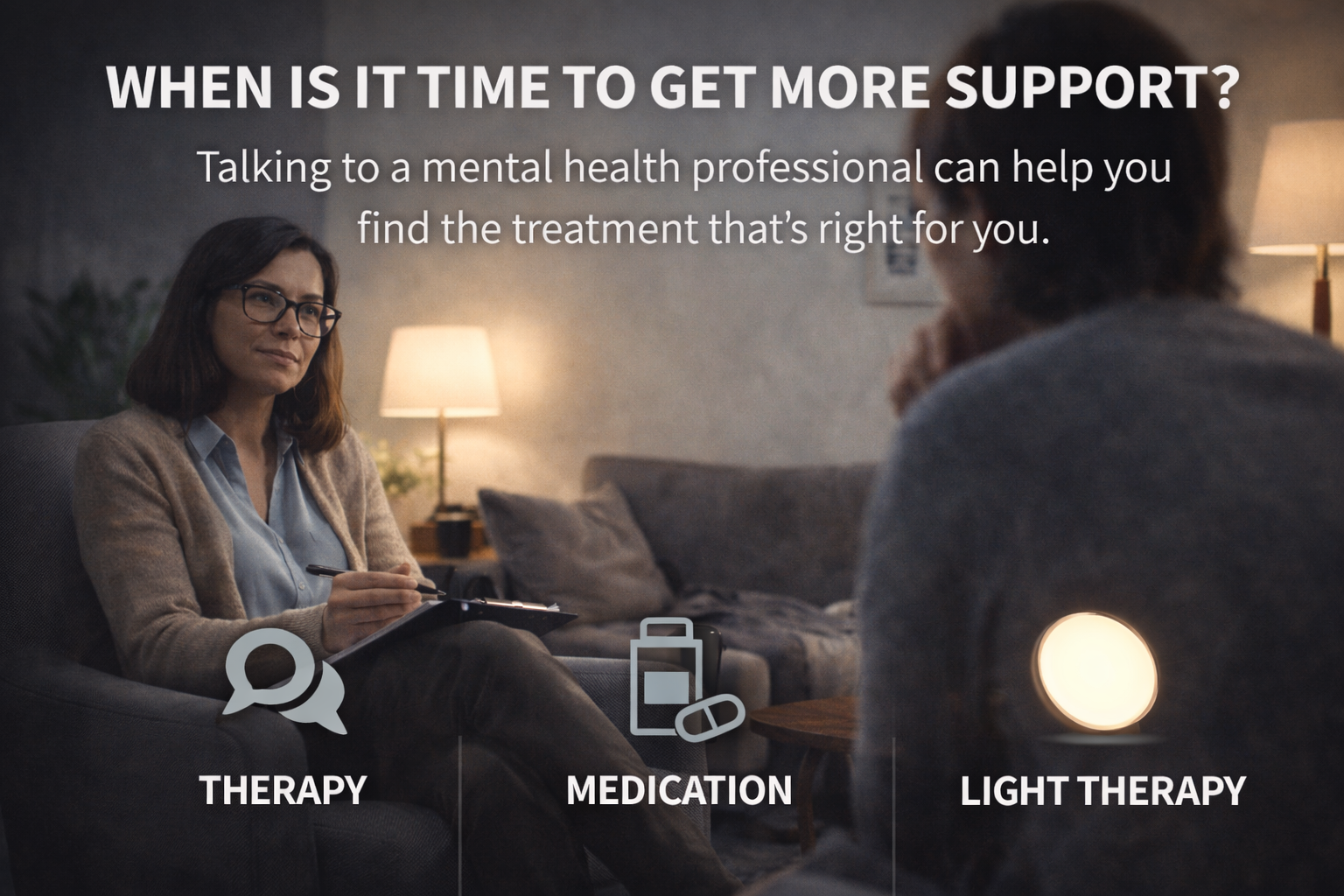
When is it time to get more support?
SAD symptoms are estimated to impact roughly 700,000 Albertans. If your symptoms are interfering with your work, relationships, or daily functioning, or if you’ve tried self-care strategies without feeling better, it’s time to reach out. Talking to a mental health professional can help you explore treatment options such as therapy, medication, or light therapy tailored to your needs. You don’t have to wait for things to get worse; support is available, and recovery is possible.
Contact us today to learn how we can support your mental well-being.
For more tips on reducing symptoms, check out these articles:
- CMHA BC - Seasonal Affective Disorder - CMHA BC
- Canadian Psychological Association “Psychology Works” Fact Sheet: Seasonal Affective Disorder
- Psychologists’ Association of Alberta: SAD Fact Sheet
Originally written by Courtney MacDonald, a former team member at Infinite Path.

Infinite Path Contributors
This content was developed by clinicians and contributors who have been part of the Infinite Path team over time. We are grateful for their contributions and the knowledge they’ve shared to support our community.